
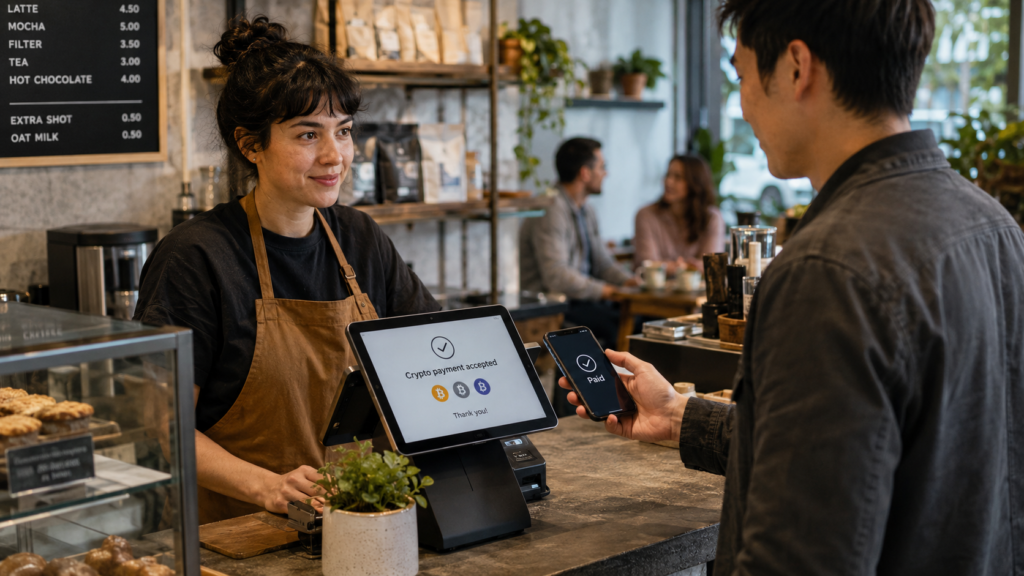
Deloitte found that 85% of surveyed merchants saw crypto payments as a way to reach new customers, and 87% broadly agreed that organizations accepting digital currencies have a competitive advantage in the market. Those numbers matter because they show that many merchants do not see crypto only as a payment experiment. They see it as a customer strategy.
Why I Think This Question Matters
I think the question matters because crypto payments sit between two worlds. On one side, many people still think of cryptocurrency as a risky investment, a trading asset, or something too technical for normal shoppers. On the other side, millions of people already own digital assets, and some of them want to use those assets in daily life.
Triple-A estimated that around 562 million people worldwide owned cryptocurrency in 2024, equal to about 6.8% of the global population. That does not mean all of them want to buy coffee, shoes, software, or hotel rooms with crypto tomorrow. However, it does show a large pool of potential customers who already understand digital wallets and may appreciate businesses that accept crypto.
For a small business, the real question should not be “Is crypto popular?” The better question is, “Are my customers likely to care about this payment option?” That answer changes by industry, country, age group, product type, and price level.
How Cryptocurrency Can Bring New Customers
I see crypto payments as a discovery tool first. When a business adds Bitcoin, Ethereum, USDT, USDC, or other digital payment options, it can become visible to a customer group that actively searches for places to spend crypto.
That matters most for online businesses. A local bakery may not see a flood of crypto customers from adding a wallet button. A VPN company, software seller, gaming platform, travel site, web hosting provider, or global e-commerce store may see a stronger reason because their customers are already digital, international, and more likely to use alternative payment methods.
CoinGate reported 1.68 million crypto payments processed in 2024, with payment volume up 29.6% from 2023. Stablecoins made up 35.5% of all transactions on the platform, which tells me that many crypto spenders are not trying to pay with highly volatile coins every time. They often prefer digital dollars such as USDT because the price feels more predictable.
| Business type | Why crypto may help | My view |
| Online stores | Can reach global buyers and crypto holders | Useful if the store already sells internationally |
| Digital services | Customers are often more tech-aware | Strong fit for software, VPNs, hosting, and subscriptions |
| Travel and luxury | Crypto holders may have higher spending power | Good fit when checkout is smooth and trusted |
| Local shops | Adds novelty and media attention | Helpful only if local demand exists |
| Small blogs and creators | Can receive support from global readers | Good for tips, donations, memberships, and digital products |
Where Competitive Advantage Really Comes From
A business does not get a real advantage just by adding a crypto logo at checkout. The advantage comes when crypto removes friction for a customer who wants to buy.
For example, a buyer in another country may not have easy access to international cards. Another buyer may prefer stablecoins because bank transfers are slow or expensive. A privacy-focused customer may prefer crypto for certain digital services. In these cases, crypto is not decoration. It solves a payment problem.
I also think crypto can help brand positioning. A business that accepts crypto may look more modern, more global, and more open to digital innovation. That impression can matter in crowded markets where customers compare many similar brands.
Still, I would not present crypto as a guaranteed sales machine. A business must connect the payment method to the right audience. If most customers use debit cards, PayPal, Apple Pay, or bank transfer without complaint, crypto may become a small side option rather than a major growth driver.
Why Stablecoins Are Changing the Payment Story
Stablecoins are one of the most practical parts of this topic. Bitcoin still carries strong brand recognition, but many shoppers and merchants worry about price swings. A coin that moves sharply during the day can make payment feel stressful.
Stablecoins offer a simpler story for everyday users because they are designed to track the value of a traditional currency, usually the U.S. dollar. That makes them easier to understand for a beginner. A customer can think, “I am paying around ten dollars,” instead of wondering whether the coin price changed during checkout.
The CoinGate data supports this trend. Stablecoins made up over one-third of its 2024 crypto payment transactions, and USDT led that category. That signals a shift from crypto as only a speculative asset toward crypto as a practical payment rail.
For small businesses, this matters because accepting stablecoins can feel less risky than accepting only volatile crypto assets. Payment processors can also convert incoming crypto into local currency, which means the merchant does not always need to hold crypto on the balance sheet.
The Risks I Would Not Ignore
I would never tell a small business owner to accept crypto without looking at the risks. Crypto payments can bring benefits, yet they also add new responsibilities.
Regulation is one major issue. Tax reporting, accounting treatment, refund handling, anti-money-laundering rules, and consumer protection rules can vary by country. A business also needs to understand whether it wants to hold crypto, convert it immediately, or use a payment processor that handles much of the technical side.
Fraud and customer support also matter. Crypto transfers can be hard or impossible to reverse, so refund policies must be clear. A beginner customer may send funds on the wrong network, choose the wrong token, or misunderstand wallet fees. That creates support work.
The simple lesson is that crypto payments should be added with a clean process, not as a rushed marketing trick. A business needs clear checkout instructions, stable pricing, processor support, and proper accounting advice.
My Final View for Small Businesses
I think accepting cryptocurrency can attract new customers and provide competitive advantage when the business has the right audience. The strongest case appears in online, global, digital, travel, luxury, creator, and tech-friendly markets.
For a general small business, I would start with stablecoins and a trusted payment processor rather than holding many different coins directly. I would also track real results for three to six months, including crypto checkout use, average order value, refund issues, customer locations, and repeat purchases.
Crypto payments work best when they make buying easier. They work less well when they are added only to look trendy. My view is simple: accepting crypto can be a useful edge, especially for businesses that already serve digital and international customers, but the advantage comes from customer fit, not from the technology alone.